We are excited to announce our keynote speakers for BPSC2026, who will share their expertise from diverse planetary science backgrounds.
Dr. Elishevah van Kooten – Centre for Star and Planet Formation, Copenhagen
Elishevah van Kooten is an assistant professor at the Centre for Star and Planet Formation whose main interests lie in astrobiology and the origins of life, with a particular focus on meteorites as records of early Solar System processes. Her work integrates isotope cosmochemistry, petrology, and the organic chemistry of meteorites to investigate the formation, alteration, and delivery of life’s building blocks. Starplan

Dr. Joseph McNeil – Natural History Museum, London
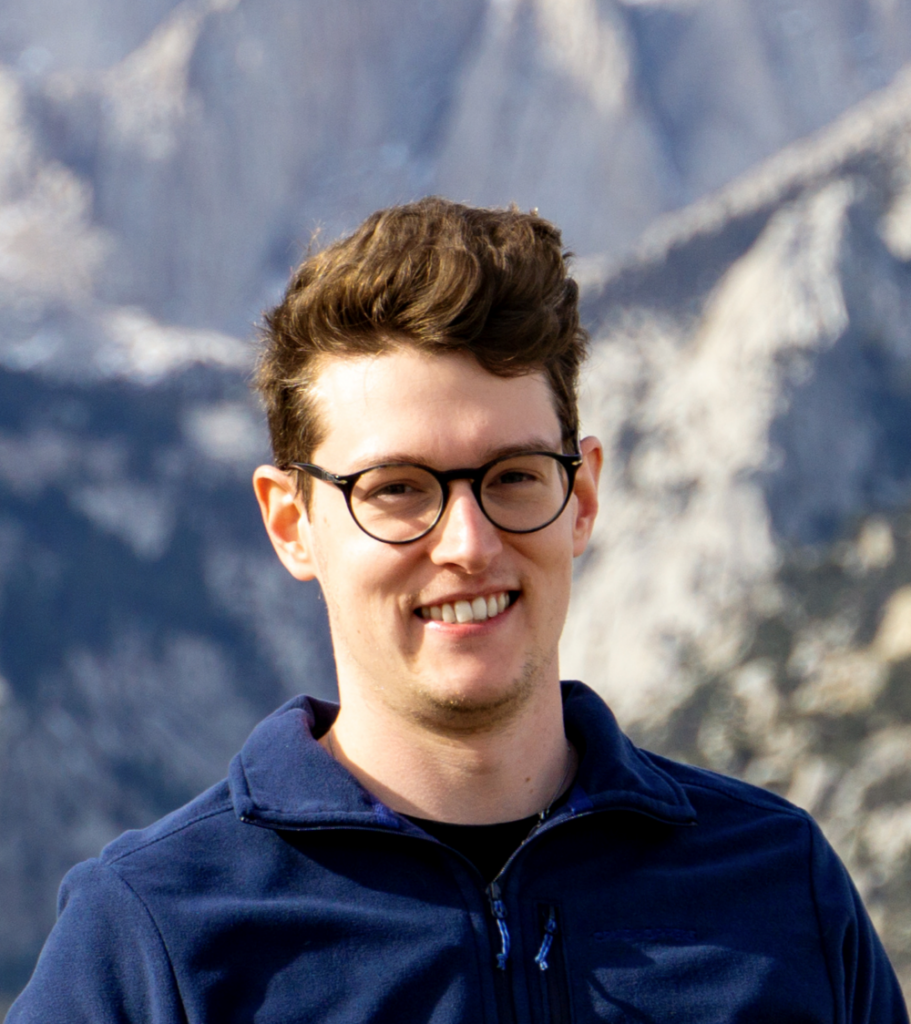
Joseph McNeil is a planetary scientist specialising in the geology of early Mars, currently working as a postdoctoral researcher at the Natural History Museum, London. Using orbital remote sensing data, he investigates how martian environments and habitability evolved through time, from detailed studies of rover landing sites to global-scale mineralogical analyses of the ancient crust. Google Scholar profile Joe’s (new) website
Dr. Amy Bonsor – Institute of Astronomy, University of Cambridge
Amy Bonsor is an astronomer studying exoplanetary systems, their formation, evolution and potential habitability. Her research has a particular focus on the composition of exoplanets, utilising spectroscopic observations of the faint stellar remnants of stars like our Sun, white dwarfs. These stars provide a unique laboratory to study the elemental composition of exoplanetary building blocks. Dr Bonsor is currently a Royal Society University Research Fellow and Associate Professor at the Institute of Astronomy, University of Cambridge. She is a fellow of Queens’ College and part of the Leverhulme Centre for Life in the Universe, University of Cambridge. Website

Olena Kompaniiets – Main Astronomical Observatory of the National Academy of Sciences of Ukraine; NGO INSCIENCE, Kyiv

Olena Kompaniiets combines research on isolated galaxies hosting active galactic nuclei with science outreach for children. She is a junior researcher at the Main Astronomical Observatory of the National Academy of Sciences of Ukraine and an educational coordinator at the NGO INSCIENCE, where she works on the Science Kids project. Launched in June 2022, Science Kids has developed a practice-first STEAM outreach model, delivering free science events for children aged 7–13 during the war. Google Scholar Profile. Science Kids website.
Read more about Olena’s research and outreach activities here.